GAY
FILM REVIEWS BY MICHAEL D. KLEMM


|
||||||
|
GAY
FILM REVIEWS BY MICHAEL D. KLEMM
|
||||||
|
|
|
|
|
|
|
 |
|||||||
|
|||||||
|
 
In Memory Of 
Mike
Maffei |
|
||
 |
|||
 |
 |
 |
|
 |
 |
 |
|
 |
 |
 |
|
 |
 |
 |
|
 |
 |
 |
|
 |
 |
 |
|
 |
 |
 |
|
 |
 |
 |
|
 |
 |
 |
|
 |
|||
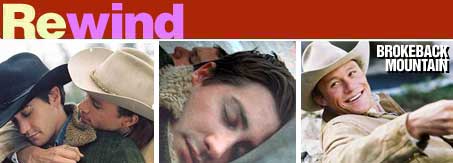
| Brokeback Mountain is the Citizen Kane of queer cinema. Some films make an impact on their first release only to be forgotten later. This one has lost none of its raw power. Brokeback Mountain was the breakthrough film that we awaited for decades. It was an exquisitely crafted movie, a critical and commercial success, and a surprise crossover hit. Conservative pundits and the family councils all went into apoplexy, jokes were made by comedians, and the mythology of the American cowboy underwent a major revision. But, above all, Brokeback Mountain was a love story that resonated with audiences both gay and straight. | |||
 |
|||
|
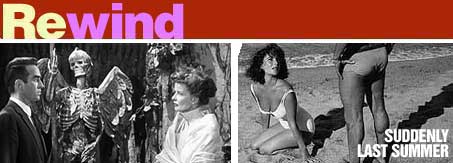
According to popular
legend, playwright Tennessee Williams underwent psychoanalysis in 1957
to "cure" his homosexuality and the play Suddenly
Last Summer
was the result. This is inaccurate; the truth is much more complicated
than that. Many view Suddenly
Last Summer,
especially the film version, as being one of the ultimate artistic
expressions of a self loathing queer. The inclusion of a negatively portrayed
homosexual is hardly proof of this; Williams' fiction is populated with
far more grotesque examples of heterosexuals. |
|||
 |
|||
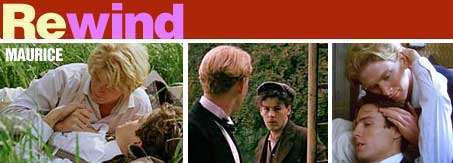
| Edwardian
England was not a good time to be gay. The climate was so bad that
noted novelist E.M. Forster began writing a book with a homosexual hero
in 1913 that he never published in his lifetime. That book, of course, is
Maurice
and, in 1987, Merchant Ivory Productions adapted the book to the screen.
The film
features superb performances and a meticulous attention to period detail.
It is a rich filmgoing experience and one of the most beautiful films in
all of queer cinema. |
|||
 |
|||
|






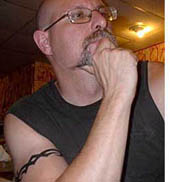 Cinemaqueer.com is a collection of over 350 gay themed film reviews that I penned from 1998 - 2015. Many were originally published in Buffalo’s monthly gay newspaper, Outcome. Over the last years, my output has dropped drastically - largely due to my night job that has infringed on all the free time that I used to devote to watching new queer films. My final review (season three of Old Dogs & New Tricks) was posted over a year ago. I feel that I am out of touch with queer cinema’s latest trends; there is too much out there now to keep abreast of, considering the limited time that I have. And so, while I might still occasionally pen a new review if the mood strikes me, I have decided to officially “retire.”